
Why Compliance Requirements Are Driving the Shift from MSP to MSSP
A few years ago, many organizations viewed cybersecurity primarily as an IT problem.
Today, it has become a business, compliance, and customer-retention issue.
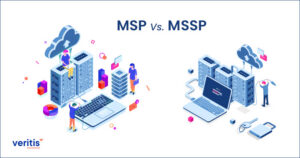
That shift is one reason many companies are reevaluating the role of their traditional Managed Service Provider (MSP) and exploring whether they also need a Managed Security Service Provider (MSSP).
The Traditional MSP Model
Traditional MSPs play a critical role in supporting business operations:
- maintaining networks
- supporting users
- patching systems
- managing Microsoft 365
- troubleshooting infrastructure
For many small and mid-sized organizations, MSPs effectively serve as outsourced IT departments.
But modern compliance frameworks increasingly require more than operational IT support.
Compliance Is Changing Security Expectations
Frameworks such as:
- SOC 2
- ISO/IEC 27001
- Cybersecurity Maturity Model Certification
- HIPAA
- NIST 800-171
all place growing emphasis on:
- continuous monitoring
- evidence collection
- vulnerability management
- access governance
- incident response
- security documentation
- audit readiness
This is where the MSSP model becomes increasingly important.
What Makes an MSSP Different?
An MSSP focuses specifically on cybersecurity operations and security governance.
Depending on the provider, this may include:
- managed detection and response
- endpoint monitoring
- vulnerability scanning
- SIEM oversight
- compliance tooling
- security reporting
- audit support
- policy alignment
Importantly, MSSPs are often designed to support organizations that face external security scrutiny from:
- customers
- auditors
- regulators
- cyber insurers
- government contracts
The Operational Problem Many Companies Face
One of the most common problems we see is fragmentation.
Organizations often have:
- an MSP handling infrastructure
- internal employees managing compliance spreadsheets
- disconnected security tools
- manual evidence gathering
- no centralized governance process
The result is:
- audit fatigue
- inconsistent evidence
- unclear ownership
- rising compliance costs
A More Integrated Model
At Strong Cyber Solutions, we have increasingly focused on helping clients integrate cybersecurity operations with compliance readiness rather than treating them as separate activities.
As part of that effort, we recently expanded our MSSP capabilities through our relationship with Drata. This allows us to provide clients with access to compliance automation and managed workflows under MSSP pricing structures that are often more cost-effective than standalone enterprise licensing.
For organizations pursuing SOC 2, ISO 27001, or preparing for future CMMC obligations, that integration can significantly reduce operational overhead.
The Future Is Likely Hybrid
Most organizations will not fully replace MSPs with MSSPs.
Instead, the future is likely a layered model:
- MSPs handling operational IT
- MSSPs handling cybersecurity operations and compliance support
- internal leadership overseeing governance and risk decisions
The key is ensuring the organization clearly understands where operational IT responsibilities end and where security and compliance responsibilities begin.
That distinction is becoming increasingly important as cybersecurity expectations continue to mature across nearly every industry.