In today’s day and age, data security is a pivotal selling point. Customers and prospects want to know that their data is secure and that the companies they sign on with have sufficient measures to ensure it stays that way. And so, companies are often tasked with proving the effectiveness of their security controls.
A SOC 2 report isn’t just a goldmine of information on how a company secures its sensitive data and information. It can also help prospects and customers understand the robustness of its security measures and posture.
Here’s a quick lowdown on who needs a SOC 2 report, what your customers will look for in it, and why you need it.
| TL; DR |
| SOC 2 report: The SOC 2 report exhaustively describes your audit and testifies to the strength of your infosec practices. |
| SOC 2 report contents: Management Assertion, Independent Service Auditor’s Report, System Description, Applicable Trust Services Criteria, Related Controls, Tests of Controls, Results of Tests, and Other information provided by the Management. |
| SOC 2 report preparation cost: The costs to prepare for the report depend on your organization’s size, the complexity of operations, and the type of auditor chosen. |
What is a SOC 2 report?
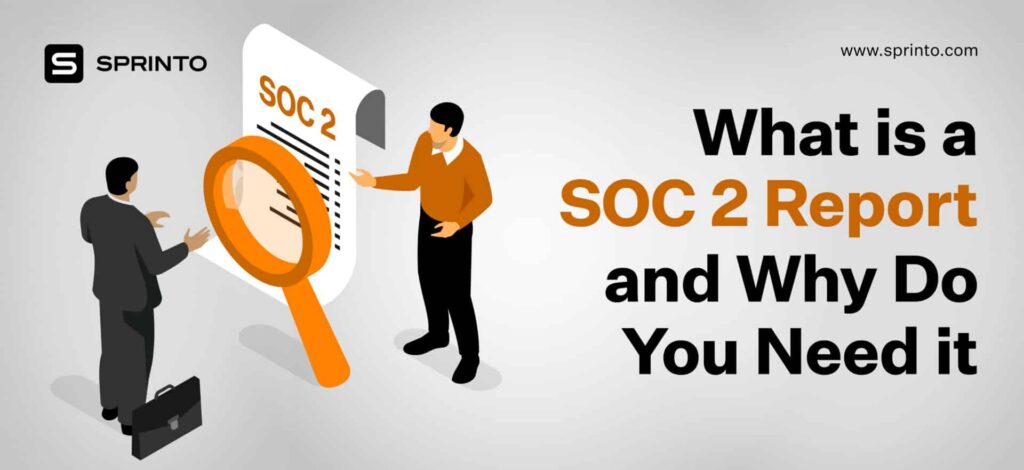
A SOC 2 report is an AICPA-accredited auditor’s analysis of a service organization’s internal operational controls and their effectiveness per SOC 2 requirements against security, availability, processing integrity, confidentiality, and privacy. It helps build trust for customers and business partners for handling sensitive data in compliance with the SOC 2 standard.
Why do companies need a SOC 2 report?
SOC 2 reports help by building your customers’ trust, strengthening your security posture, adopting security best practices, and enabling organizational growth. It acts as a testament of trust for your vendors and boosts stakeholder confidence.
Here are the 9 reasons for organizations to have SOC 2 report:
Who needs a SOC 2 report?
A SOC 2 report is needed by service organizations that store, process or transmit sensitive customer data or handle critical functions for clients. A SOC 2 compliance report is crucial to foster client trust and ensure integrity of services.
For example, the following service organizations must obtain a SOC 2 report:
1. Cloud service providers
Cloud service providers are third-party organizations providing infrastructure (IaaS), platform (PaaS) or software as a service (SaaS) to businesses. CSPs provide access to computing resources to manage data, security needs, analytics etc. As such, they are required to assure the customer about the safety of data stored and that is where a SOC 2 report precisely plays its part.
2. Healthcare service providers
Healthcare service providers such as medical billing companies that handle sensitive PHI are required to submit a SOC 2 report to hospitals, insurance companies etc. The SOC 2 report serves as an assurance of implementation of safeguards to protect privacy and confidentiality of patient data.
3. Payment processors
Payment processors that handle sensitive cardholder data for various payment related services need to obtain a SOC 2 compliance report. The report certifies that necessary tools and practices have been deployed to secure bank account details, credit card numbers and other such critical and vulnerable information.
4. Managed service providers
Managed service providers provide remote solutions for managing customer’s IT needs such as network management, data backups, infrastructure and security among others. A significant amount of client’s sensitive data is exposed to the MSP and a SOC 2 report is essential to confirm the effectiveness of controls in place for safeguarding information.
5. Other organizations handling sensitive data
Other organizations such as data centers, government contractors, financial institutions etc. handling critical data must obtain SOC 2 to demonstrate that they prioritize data security and compliance. Such service providers also have a competitive edge in differentiating them from peers.
Sprinto automates SOC 2 compliance for all such organizations and enables them to breeze through SOC 2 audit. The platform helps you build a tightly integrated pipeline of controls and run automated checks to ensure continuous compliance. Read how Phyllo cut through compliance complexity with Sprinto.
Types of SOC 2 reports
There are two types of SOC 2 reports based on the depth of evaluation and the monitoring period—Type 1 and Type 2. A Type 1 report evaluates the effectiveness of controls and compliance with SOC 2 at a point in time. A Type 2, on the other hand, is an evaluation of compliance and controls over an evaluation period.
SOC 2 Type 1 report reviews the design of an organization’s internal controls as per SOC 2 requirements at a point in time. It’s like a snapshot of the design of internal controls. So, to that extent, it is not very comprehensive and takes lesser time to obtain (relative to SOC 2 Type 2).
A SOC 2 Type 2 report is an independent auditor’s evaluation of both the design and operating effectiveness of an organization’s internal controls over a defined period ( 3–12 months). Unlike a Type 1 report, which is only a snapshot at a single point in time, a Type 2 provides evidence that controls consistently function as intended, making it more comprehensive and widely trusted by customers and partners.
Also find out the difference between SOC 2 vs ISO 27001 compliance, if you are planning to get ISO certified as well.
How does SOC 2 compliance ensure data security?
SOC 2 compliance is essentially a seal of approval for how well a company safeguards your data. This assurance comes after thorough audits scrutinizing every aspect of data handling to ensure it’s done responsibly.
SOC 2 requires the establishment of comprehensive security policies and procedures. These policies define how data should be handled, accessed, and protected throughout its lifecycle.
Moreover, SOC 2 requires continuous monitoring of systems and networks to detect potential security incidents or anomalies promptly. Logging and audit trails are maintained to track access to sensitive data and to facilitate forensic investigations if security breaches occur.
What does a SOC 2 report include?
Apart from general information on the audited organizations, SOC 2 reports are sought after for the auditor’s opinion on their independent assessment of the organization’s controls. It also comprises a description of the tests involved and recommendations to improve data security protocols where needed. You must select an AICPA-accredited CPA (firm or individual) to conduct your audit.
SOC 2 reports can run into many pages and include the following sections:
Section 1: Management Assertion
The section captures a summary of the organization’s services, products, applications, structures, systems and security controls and gets written by the audited organization. The management acknowledges that the information provided is accurate and relevant.
Section 2: Independent Service Auditor’s Report
This section comprises the much sought-after auditor’s opinion on the organization’s cyber security posture; it, however, doesn’t give details beyond that.
Section 3: System Description
Section 4: Applicable Trust Services Criteria and Related Controls, Tests of Controls, and Results of Tests
This section summarizes all the tests and its results performed during the audit, which makes it a critical part of the report. The section provides insights into the auditor’s opinion described in section 2.
SOC 2 Trust Service Criteria, formerly known as Trust Service Principle, comprise security, availability, confidentiality, privacy, and processing integrity. The first three sections in both SOC 2 Type 1 and SOC 2 Type 2 reports are similar, but this section differs significantly.
Type 1 report features a list of all the controls in the evaluation period. Type 2 report will also present the auditor’s tests and the test results for each listed control. For a Type 2 report, this section will also highlight exceptions or deviations noted by the external auditor.
Aside from the Trust Service Principles, the organization’s infrastructure, software, people, data and procedures also get audited.
Section 5: Other information provided by the Management
This section is optional. It comprises management’s response to the variations highlighted by the auditor in the earlier section. The management gives more context and information around the exceptions, citing reasons for the deviations and proposing ways to ensure it doesn’t repeat.
How long does it take to prepare a SOC 2 report?
The time to obtain your SOC 2 report depends on several factors – the type of SOC 2 report, the route to SOC 2, and the complexity of your business processes. If you use a DIY approach or rope in an external consultant to get your report, you must set aside 3-6 months for audit preparation alone.
Add to that the audit monitoring period of 3-12 months for SOC 2 Type 2, and the minimum time to procure a SOC 2 report is roughly six months! And that’s an optimistic bet. Type 1 takes lesser time in comparison.
Also read: Guide to SOC 2 Type 2 certification
When you work with compliance automation platforms like Sprinto, you can drastically cut down the audit period and time to get a report. Our clients get audit ready in weeks and are able to fast-track the certification process because of streamlined workflows. Read how Ripl achieved audit readiness in 25 days and completed the audit in 14 days after moving to SOC 2.
Here’s what Dassana has to say about getting SOC 2 Type 2 with Sprinto: