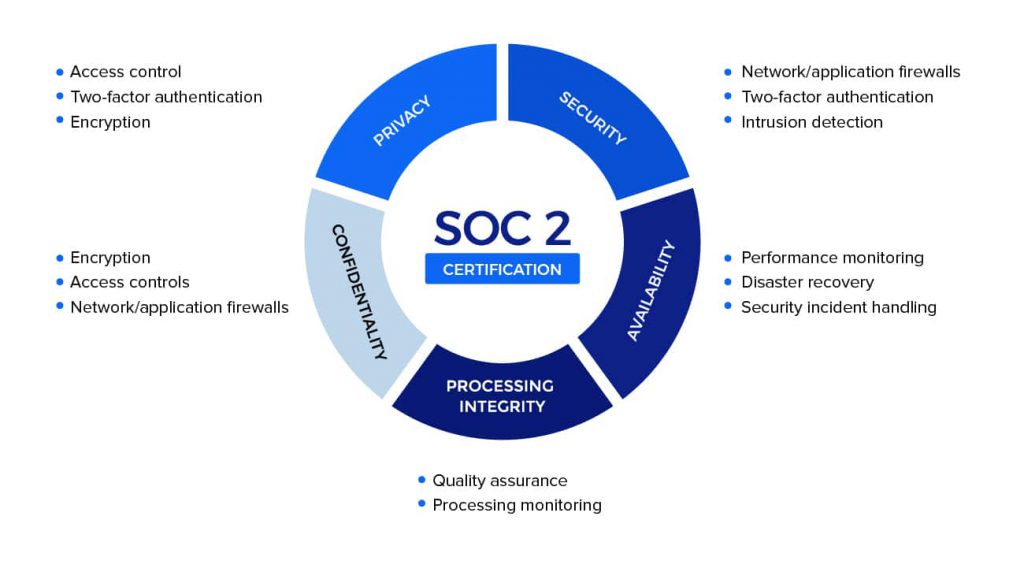
To enforce SOC 2 access controls, organisations must implement role-based access with least privilege, ensure all permissions are continuously verified through recertification cycles, and maintain a traceable evidence chain linking every access event to compliance requirements. Automation and centralised control mapping are key to reducing audit risk and maintaining operational integrity.
Why Robust Access Controls Are Essential
The Operational Imperative of Cohesive Access Management
Robust access controls form the backbone of secure compliance, directly impacting the integrity of your audit trails. Fragmented credential management and unmonitored access channels create gaps that not only expose sensitive data but also compromise your ability to document every change with precision. Without seamless control mapping, vulnerabilities persist undetected, increasing the risk of control failure during audits.
Impact on Audit Documentation and Compliance Verification
Effective controls work by connecting every permission with a corresponding, structured evidence chain. When every access point is consistently verified and logged with clear timestamps, your audit logs accurately reflect the operational state of your organisation. This structured approach transforms compliance from a manual checklist into a verifiable record that withstands auditor scrutiny. In this system, each policy approval, stakeholder action, and control update is interlinked, ensuring that every piece of evidence supports your overall SOC 2 commitment.
Defining Access Controls: Distinguishing Logical and Physical Measures
Establishing a Secure Compliance Foundation
Robust access control systems are the cornerstone of a compliant security framework. By clearly delineating digital controls from tangible safeguards, organisations build a verifiable evidence chain that reinforces every approval and change across your operations. This precision in control mapping ensures that every user interaction is logged, establishing an audit window that stands up to regulatory scrutiny.
Logical vs. Physical Controls Explained
Logical controls manage digital entry points. These include password protections, multifactor authentication, and role-based authorisations that restrict system interactions. Such measures precisely verify each access attempt and monitor credential usage, reducing the likelihood of unauthorised data manipulation.
Physical controls, on the other hand, secure the tangible aspects of your operations. They cover facility access, environmental monitoring, and hardware protection—ensuring that critical assets remain shielded from physical breaches. Together, these measures support continuous control tracing while preventing exposures that could compromise overall security.
Integrating Controls for Unified Assurance
When digital and tangible safeguards operate in tandem, your audit trail becomes an integrated system of trust. This approach minimises compliance gaps by linking every access permission with structured, timestamped evidence. Without such rigorous control mapping, gaps can persist unnoticed until audit day. With streamlined evidence mapping, your organisation transforms routine compliance into an operational asset—reducing manual efforts and reinforcing a steady compliance signal.
Book your demo with ISMS.online to discover how our platform converts complex access control challenges into a continuously verified proof mechanism, ensuring that your compliance remains both efficient and foolproof.
Establishing the Strategic Value of Enforcing Access Controls
Operational Imperatives for Structured Control Mapping
Robust control enforcement is a strategic investment that strengthens your security posture by ensuring every access decision is part of a traceable evidence chain. When controls align with your day-to-day operations, audit logs transform into a precise audit window—each access event logged with clear, timestamped verifiability. Insufficient mapping leaves gaps that can expose critical data and elevate risk, making it essential to verify that every permission is documented and continuously proven.
Operational Advantages
A streamlined system for verifying user credentials and mapping access decisions to compliance standards produces measurable benefits:
- Enhanced Audit Performance: Structured evidence mapping and scheduled recertification processes ensure that every log reflects operational integrity.
- Improved Efficiency: With integrated reviews that replace manual oversight, security teams reclaim valuable bandwidth and reduce error.
- Cost Efficiency: Consistent enforcement minimises compliance exceptions, reducing remediation costs and preserving budget for strategic initiatives.
Strategic and Financial Impact
By reassessing each access point continuously, your organisation decreases its risk profile and reinforces stakeholder confidence. Proactive control enforcement shifts compliance from a reactive checklist to an ongoing verification process. This system traceability guarantees that every log entry is substantiated with verifiable data, transforming audit preparation into an efficient, frictionless operation.
ISMS.online exemplifies this approach by converting complex access control challenges into a structured, continuously verified proof mechanism. When your evidence is automatically mapped and maintained, your security posture becomes an operational asset that drives both efficiency and financial prudence.
Book your ISMS.online demo to discover how converting manual compliance friction into a continuously verified system not only simplifies audit preparation but also builds a resilient, efficient security framework.
Managing The Credential Lifecycle Efficiently
Streamlined Credential Issuance
Effective credential management begins with rigorous identity verification and precise role assignment. Issuance establishes a secure starting point where each new user’s access rights are defined via strict verification protocols and the generation of secure credentials. Every credential enters a traceable evidence chain that supports audit readiness and control mapping.
Ongoing Credential Verification
Regular review cycles are critical to maintaining system integrity:
- Scheduled assessments verify that each credential remains in line with current responsibilities.
- Flags detect credentials that no longer match current job functions.
- Integrated tracking systems consistently monitor user interactions to ensure that every access event is logged with precise timestamps.
These steps ensure that access permissions are continuously validated, minimising the window for potential misuse and reinforcing the accuracy of each audit log entry.
Secure Offboarding Procedures
When personnel leave or shift roles, removing their access promptly is essential:
- Deactivation protocols: immediately nullify active credentials upon role change.
- Data sanitization processes: ensure that all related access logs and sensitive information are systematically purged.
- Strict adherence to compliance standards creates a verifiable record of every deactivation, supporting ongoing audit readiness.
Operational Insights & Continuous Alignment
A well-defined credential lifecycle—spanning initial issuance, regular verification, and secure deactivation—reduces vulnerabilities and deepens compliance. Organisations that adopt this structured approach report a notable reduction in security incidents and enjoy enhanced operational efficiency. With every user interaction mapped and logged as part of a continuous control signal, manual oversight is relieved, enabling teams to focus on strategic risk management.
Book your ISMS.online demo to simplify your SOC 2 compliance through continuous, evidence-backed control mapping and streamlined credential management.